Modern Abstract Design Shapes: A Practical Guide to Integrating Hand-Drawn Vector Elements into Your Creative Workflow
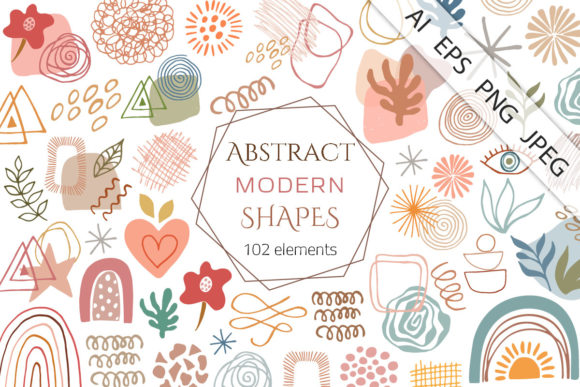
In the landscape of contemporary digital design, the demand for authentic, organic aesthetics has surged. Modern Abstract Design Shapes represent a specific intersection of this trend, offering a curated collection of hand-drawn vector illustrations that bridge the gap between rigid geometric minimalism and freeform artistic expression. For professionals ranging from graphic designers and branding specialists to small business owners and content creators, these assets are not merely decorative; they are functional components of a streamlined production pipeline. This collection, characterized by its boho, doodle, scandi, and minimalist styles, provides a versatile toolkit for creating everything from fashion prints to social media graphics.
The value of such a resource lies in its versatility and technical readiness. By providing high-quality PNGs, EPS vectors, and seamless patterns, the product addresses multiple stages of the design process, from initial sketching and layout planning to final export and printing. Understanding how to integrate these elements effectively requires looking beyond the visual appeal and examining their practical application in real-world workflows.
Understanding the Asset Structure and Technical Compatibility
Before diving into creative applications, it is essential to understand the structural integrity of the asset library. Modern Abstract Design Shapes includes 102 high-quality PNG elements on transparent backgrounds, ranging from 2000x2000 pixels to 4000x4000 pixels. This resolution range is critical for scalability. In professional workflows, starting with high-resolution source files allows designers to manipulate elements without losing clarity, whether scaling down for mobile icons or expanding for large-format posters.
The inclusion of 72 single elements and 30 collages offers distinct advantages for different project phases. Single elements are ideal for modular design systems, allowing users to pick and choose specific shapes—such as leaves, circles, or abstract lines—to build custom compositions. Conversely, the 30 pre-assembled collages serve as robust starting points or background layers, significantly reducing the time spent on initial layout construction. For those working in Adobe Illustrator or similar vector-based software, the inclusion of 102 EPS files and 2 AI files with artboards ensures that every stroke remains editable. This vector capability is crucial for maintaining crisp edges at any size and allows for color customization to match brand guidelines precisely.
Furthermore, the provision of 30 JPEG files with collages on white backgrounds caters to raster-based workflows, such as Photoshop editing or quick mockups where vector conversion is unnecessary. The additional EPS file containing all single elements and another with collactions provide a consolidated view, useful for inventory management and quick reference during brainstorming sessions.
Strategic Applications Across Design Disciplines
The utility of Modern Abstract Design Shapes extends across a wide spectrum of design disciplines. Their primary strength lies in their ability to add texture and personality to otherwise flat or sterile designs. Here is how these assets fit into specific professional contexts:
- Branding and Identity: For entrepreneurs and marketers, establishing a unique visual identity is paramount. The hand-painted, aesthetic quality of these shapes can be used to create memorable logos, icons, and logo variations. The minimalist and scandi styles are particularly effective for brands aiming to convey simplicity, elegance, and modernity. By isolating specific elements like a single leaf or a geometric circle, designers can construct a cohesive visual language that feels both trendy and timeless.
- Packaging and Product Design: Small business owners selling physical goods often struggle with packaging differentiation. These abstract shapes are perfect for creating custom labels, tags, and box designs. The seamless patterns provided (available in JPEG, EPS, and PNG formats) allow for continuous tiling, which is essential for wrapping paper, fabric prints, or product backing cards. The ability to print these in high resolution ensures that the final physical product maintains the same quality as the digital preview.
- Digital Content and Social Media: Bloggers, educators, and influencers require consistent, high-volume content creation. The 30 collages act as ready-made templates for Instagram posts, Pinterest pins, or blog headers. By overlaying text onto these abstract backgrounds, creators can maintain a consistent aesthetic while varying the underlying imagery. The transparent PNGs allow for layering effects, enabling the creation of dynamic stories or animated graphics by moving individual elements.
- Print and Editorial Design: For publishers and freelance illustrators, these elements are invaluable for creating postcards, invitations, and editorial layouts. The "cute" and "doodle" aspects of the collection lend themselves well to children’s patterns and educational materials, while the "geometric" and "flat" styles suit corporate presentations and infographics. The availability of vector files ensures that text and shapes can be resized without pixelation, a common issue when using lower-quality raster images.
Integrating Assets into a Streamlined Workflow
Efficiency in design is often determined by how well tools and assets are integrated into the daily workflow. To maximize the utility of Modern Abstract Design Shapes, consider the following implementation strategies:
Preparation and Organization
Upon acquisition, the first step should be organization. With over 100 elements, sorting them into logical folders based on style (e.g., Boho, Minimalist, Geometric) or type (Single vs. Collage) will save significant time during active projects. Import the AI and EPS files into your preferred design software to verify compatibility. Create a master document or a symbol library where frequently used elements are stored. This preparation phase reduces friction during the execution stage, allowing you to focus on creativity rather than file management.
Design Execution and Customization
When beginning a project, start with the broader structure. If you need a background, utilize the 30 collages. Because they are available in high-resolution JPEGs and scalable EPS files, you can adjust opacity, blend modes, and colors to fit your composition. For focal points, select individual PNG or vector elements. The transparency of the PNGs makes them easy to drop into existing PSD files, while the vector nature of the EPS files allows for precise alignment and manipulation.
A key advantage of this collection is the variety of line weights and styles. Use thin, delicate lines for elegant invitations or luxury branding, and bolder, doodle-style shapes for casual, approachable content. Experiment with layering; for instance, place a solid color shape behind a hand-drawn outline to create depth. This technique adds visual interest without cluttering the design.
Quality Control and Export
Before finalizing any design, review the assets at 100% zoom to ensure no unintended artifacts have appeared, especially if you have manipulated vector paths. When exporting for web use, optimize PNGs to balance quality and file size. For print, always use the EPS or high-resolution PDF versions to ensure the highest possible output quality. The included design samples serve as excellent references for checking color consistency and scale relative to other design elements.
Long-Term Value and Versatility
Investing in a comprehensive asset library like Modern Abstract Design Shapes is a long-term strategy for creative sustainability. Trends in design shift rapidly, but foundational elements like abstract shapes, leaves, and geometric forms remain relevant. By mastering the integration of these elements, designers can quickly adapt to new trends by simply changing the color palette or arrangement of familiar shapes.
Moreover, the diversity of the collection supports cross-platform consistency. A brand identity established using these shapes can be seamlessly extended from a website header to a business card, from a social media avatar to a physical product package. This consistency reinforces brand recognition and professionalism. For freelancers and agencies, having a reliable library of high-quality, licensable assets reduces dependency on external resources, speeding up turnaround times and improving client satisfaction.
In conclusion, Modern Abstract Design Shapes is more than just a pack of clipart; it is a comprehensive resource designed to enhance the efficiency and quality of the design process. By understanding the technical specifications, strategic applications, and workflow integration methods, creators can leverage these hand-drawn vector illustrations to produce compelling, professional-grade work across a multitude of mediums. Whether you are crafting a minimalist logo or a vibrant children’s pattern, these elements provide the flexibility and quality needed to bring your vision to life.