Elevating Visual Narratives: A Comprehensive Guide to the Typographic Ornament Collection
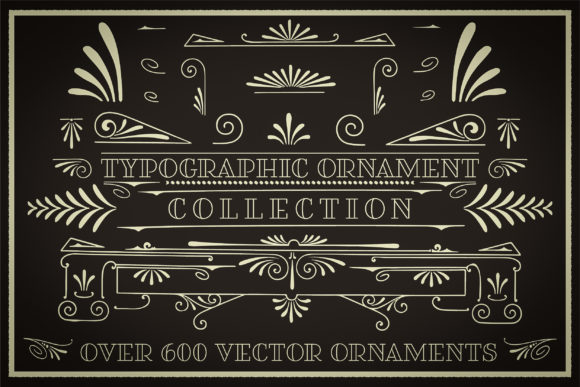
In an era where digital saturation threatens to dilute the impact of visual communication, the distinction between generic content and crafted artistry has never been more critical. Designers, educators, and creative professionals are increasingly turning to historical aesthetics to ground their modern projects in a sense of permanence and elegance. At the heart of this resurgence is the Typographic Ornament Collection, a comprehensive library of over 600 decorative vintage ornaments designed to infuse artwork, signage, and creative projects with an illustrative, fancy flare. This resource is not merely a set of clipart; it is a toolkit for elevating visual hierarchy, adding texture, and bridging the gap between contemporary design trends and classical craftsmanship.
The value of such a collection lies in its versatility and technical precision. By providing these elements in fully scalable vector formats, the collection ensures that designers can manipulate intricate details without compromising resolution. Whether used to frame a wedding invitation, decorate a coffee shop menu, or enhance a digital presentation, these ornaments serve as the finishing touches that transform ordinary layouts into extraordinary experiences. Understanding how to effectively integrate these vintage elements requires a look at their technical specifications, practical applications, and the psychological impact they have on the viewer.
The Technical Foundation: Vector Precision and Print Readiness
One of the most significant advantages of the Typographic Ornament Collection is its adherence to professional technical standards. The inclusion of 12 individual EPS (Encapsulated PostScript) files provides a robust framework for scalability. In the world of graphic design, raster images—those made of pixels—lose quality when enlarged, resulting in jagged edges and blurred details. Vector graphics, conversely, are built upon mathematical equations that define lines and curves. This means that an ornament from this collection can be scaled from the size of a postage stamp to the width of a billboard without any loss of fidelity.
This scalability is crucial for professionals who need to produce assets across multiple mediums. A logo designer might use a small ornamental flourish in a brand mark, while a large-format printer might require the same element to cover a massive trade show banner. The ability to edit these vectors allows for customization, enabling users to modify colors, adjust proportions, or combine different ornaments to create unique composite designs. This flexibility empowers creators to tailor the aesthetic to specific brand guidelines or artistic visions, ensuring that the final output is both cohesive and distinct.
Furthermore, the collection is optimized for print production with CMYK color mode and a resolution of 300 PPI (Pixels Per Inch). While vector files are resolution-independent, the provision of high-resolution raster previews or embedded data ensures compatibility with various software workflows. CMYK (Cyan, Magenta, Yellow, Key/Black) is the standard color model for printing, differing from RGB (Red, Green, Blue), which is used for screens. By specifying CMYK, the collection acknowledges the realities of physical production, helping designers avoid the common pitfall of colors appearing dull or shifted when printed. The 300 PPI specification guarantees that any raster-based components or previews are sharp enough for high-quality commercial printing, meeting the rigorous demands of professional publishing and signage industries.
Bridging Eras: The Appeal of Vintage Aesthetics in Modern Design
Why do vintage ornaments remain relevant in a digital-first world? The answer lies in the human desire for authenticity and connection. Vintage typography and decoration evoke a sense of history, trustworthiness, and artisanal quality. In a marketplace flooded with minimalist, sterile designs, ornate elements stand out by offering warmth and character. They signal that care has been taken in the creation of the piece, suggesting a level of attention to detail that resonates with consumers.
The Typographic Ornament Collection captures this essence through its diverse array of motifs. These include flourishes, borders, filigrees, and standalone icons that draw inspiration from historical periods such as Art Nouveau, Victorian, and Baroque. Each style carries its own emotional weight. For instance, the sweeping curves of Art Nouveau suggest nature and fluidity, making them ideal for wellness brands or organic products. In contrast, the rigid symmetry of Victorian borders conveys formality and tradition, suitable for legal documents, academic certificates, or luxury goods packaging.
By incorporating these elements, designers can instantly communicate a brand’s personality without relying solely on copy. A restaurant menu adorned with delicate floral ornaments feels more inviting and gourmet than one with plain text. A book cover featuring intricate corner pieces suggests a classic literary work, enhancing the perceived value of the content. This visual shorthand allows audiences to connect with the material on an intuitive level, fostering engagement before they even read a single word.
Practical Applications Across Industries
The utility of the Typographic Ornament Collection extends far beyond traditional graphic design studios. Its broad applicability makes it a valuable asset for a wide range of professionals and hobbyists. Below are several key sectors where these ornaments add significant value:
- Event Planning and Stationery: Wedding invitations, save-the-dates, and thank-you cards benefit immensely from ornamental framing. These elements guide the eye toward the essential information—date, time, and location—while adding a layer of celebration and elegance. The ability to customize colors via vector editing allows couples to match their exact wedding palette perfectly.
- Education and Academia: Educators and researchers often struggle to make learning materials visually engaging. Using vintage ornaments to highlight key concepts, separate sections, or decorate certificates can increase student interest and retention. For example, a history textbook could use period-appropriate borders to contextualize each chapter, creating a more immersive reading experience.
- Retail and Signage: Small business owners, particularly in the food and beverage industry, use these ornaments to create distinctive branding. A coffee shop might use ornate dividers on their menu to separate espresso drinks from pastries, or a boutique hotel might use them on room keys and welcome packets to convey luxury and hospitality.
- Digital Content Creation: Bloggers, YouTubers, and social media influencers utilize these assets to create branded templates. Thumbnails, end screens, and story highlights can be enhanced with subtle flourishes to maintain a consistent visual identity. The vector format ensures that these elements remain crisp on high-resolution mobile devices and tablets.
- Packaging Design: Product packaging is a powerful marketing tool. Vintage ornaments can be used to create labels for artisanal foods, cosmetics, or spirits. They help products stand out on crowded shelves by appealing to consumers’ appreciation for handcrafted quality and heritage.
Workflow Integration and Creative Flexibility
Integrating the Typographic Ornament Collection into a creative workflow is straightforward, thanks to its compatibility with major design software. Because the files are in EPS format, they can be easily imported into Adobe Illustrator, CorelDRAW, Affinity Designer, and other vector-based applications. Once imported, the ornaments can be manipulated using standard tools: resized, rotated, filled with gradients, or combined with other shapes.
One effective technique is layering. Designers can place a semi-transparent ornament behind text to create depth, or use a solid-colored flourish to underline a headline for emphasis. Another approach is deconstruction. Since the ornaments are editable vectors, users can break apart complex designs into their constituent parts. A large border might be split into four corners and two side panels, allowing for modular arrangement. This level of control encourages experimentation and helps prevent the "clipart look" that can occur when pre-made assets are used without modification.
For those working in raster-based programs like Photoshop, the high-resolution nature of the collection ensures that zooming in and out does not degrade the image. Users can apply filters, blend modes, and opacity adjustments to integrate the ornaments seamlessly into photographs or illustrations. This cross-platform compatibility makes the collection a versatile addition to any designer’s library, regardless of their preferred software ecosystem.
Considerations for Ethical and Effective Use
While the benefits of using the Typographic Ornament Collection are clear, it is important to approach their use with intentionality. Over-decoration can lead to visual clutter, distracting the viewer from the core message. The principle of "less is more" still applies; ornaments should enhance the content, not overwhelm it. Designers should consider the context and audience when deciding where to place decorative elements. A formal business report may only need subtle corner accents, whereas a concert poster might benefit from bold, all-over patterns.
Additionally, consistency is key. Mixing too many disparate styles of vintage ornaments can create a chaotic aesthetic. It is advisable to select a cohesive subset of the collection that aligns with the project’s overall theme. For example, pairing Art Nouveau florals with Victorian geometric borders may result in a disjointed look. Instead, curating a specific style ensures a harmonious visual narrative.
Finally, respecting intellectual property is essential. While the collection provides extensive usage rights for creative projects, users should always review the specific licensing terms associated with the purchase. Ensuring compliance protects both the creator and the client, maintaining ethical standards in the design industry.
Conclusion
The Typographic Ornament Collection represents more than just a bundle of decorative files; it is a gateway to richer, more meaningful visual communication. By combining historical charm with modern technical capabilities, it empowers creators to add depth, texture, and personality to their work. From enhancing the elegance of a wedding invitation to adding sophistication to a corporate brand identity, these ornaments offer endless possibilities for expression. As we continue to navigate a digital landscape dominated by fleeting trends, the timeless appeal of well-crafted vintage design remains a constant source of inspiration and refinement. Embracing these tools allows professionals and hobbyists alike to elevate their projects, ensuring that their work not only informs but also delights and engages.