Crab: A Versatile Asset for Creative and Professional Workflows
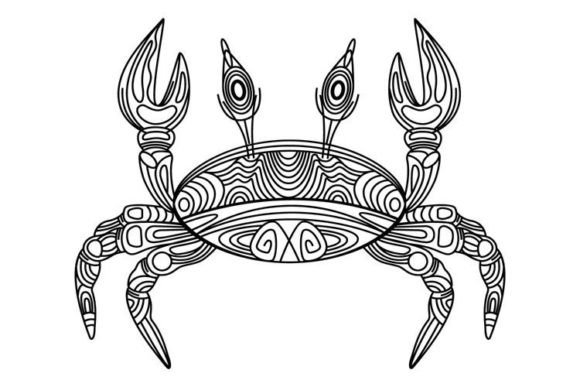
In the landscape of digital asset management, specific visual elements often serve as the bridge between a conceptual idea and its final execution. The Crab illustration described here is not merely a decorative image; it is a high-fidelity vector asset designed to integrate seamlessly into complex design systems, marketing campaigns, and educational materials. This stylized piece features an ornate, decorative line art style with a black outline trim, isolated on a white background. Its technical specifications—including inclusion in JPG, PNG, SVG, AI, and EPS formats—make it a robust tool for professionals who demand precision across different media.
Understanding the Asset's Technical Foundation
The value of this Crab illustration lies in its multi-format delivery. For a professional workflow, compatibility is paramount. The availability of the file in SVG (Scalable Vector Graphics) and AI (Adobe Illustrator) ensures that the image remains crisp at any resolution, from a small mobile icon to a massive billboard. Unlike raster images that pixelate when enlarged, these vector files allow designers to manipulate anchor points, adjust stroke weights, and recolor the intricate details without losing quality.
The EPS format further extends usability, offering compatibility with industry-standard software like CorelDRAW and Adobe Illustrator. This cross-platform support is essential for freelancers and agencies working in diverse environments where file exchange must be flawless. Additionally, the provided JPG version offers a 300 PPI density, which is the gold standard for print production. Whether preparing a brochure, a business card, or a high-resolution poster, the print-ready nature of this asset eliminates the need for time-consuming upscaling or quality restoration.
For web and digital applications, the PNG version with a transparent background is indispensable. It allows the ornate crab design to sit cleanly over any color scheme or photographic background, removing the rigid constraint of a white box. This flexibility supports rapid prototyping and layout adjustments, ensuring that the visual hierarchy of a project remains intact regardless of the underlying design.
Strategic Integration in Creative Processes
Integrating a stylized Crab illustration into a workflow requires understanding its aesthetic role. The black thin line and ornate detailing suggest a sophisticated, perhaps vintage or nautical theme. This makes it particularly effective for branding projects that aim to convey heritage, craftsmanship, or a connection to the ocean. In a practical sense, this asset can be deployed during the ideation phase to establish a mood board, helping stakeholders visualize the potential direction of a brand identity.
During the execution phase, the vector nature of the file allows for dynamic adaptation. A graphic designer might isolate specific parts of the shell or claws to create custom patterns for textiles or packaging. Because the lines are clean and defined, they work exceptionally well for embossing, foil stamping, or laser cutting processes common in physical product manufacturing. The ability to edit the vector paths means that the crab can be modified to fit specific dimensional constraints without compromising the artistic integrity of the original concept.
For educators and content creators, this illustration serves as a powerful visual aid. When explaining marine biology, ecosystem dynamics, or even metaphorical concepts like "thinking sideways" or resilience, a high-quality, stylized image captures attention more effectively than generic clip art. The transparency of the PNG file allows teachers to overlay the crab onto diagrams, maps, or interactive slides, enhancing the learning experience without cluttering the screen.
Workflow Efficiency and Organizational Benefits
Efficiency in a creative workflow is often determined by how quickly assets can be sourced, adapted, and implemented. Having a single download that includes JPG, PNG, SVG, AI, and EPS formats streamlines this process significantly. Instead of searching for different versions of an image for print versus web, a team member can access all necessary variants immediately. This reduces administrative overhead and minimizes the risk of using low-resolution assets that could compromise the final output.
Organization is another critical factor. When managing large projects, maintaining a consistent library of high-quality vectors is essential. This Crab illustration, with its clear isolation and standardized formats, fits easily into existing asset management systems. Teams can tag it with relevant keywords such as "nautical," "line art," "ornate," and "vector" to ensure it is discoverable for future projects. The consistency of the black outline trim ensures that it pairs well with other monochromatic or minimalist design elements, promoting visual cohesion across a campaign.
Quality control is inherently supported by the technical specs of this asset. The 300 PPI density guarantees that print outputs will meet professional standards, while the vector formats ensure that digital displays remain sharp. This dual capability reduces the need for rework, saving both time and resources. For small business owners and entrepreneurs, this translates to cost savings and a faster time-to-market for promotional materials.
Practical Use Cases Across Industries
The versatility of this Crab illustration extends across various sectors. In the hospitality industry, restaurants and bars specializing in seafood can utilize the ornate design for menu covers, signage, and social media graphics. The stylized nature adds a touch of elegance that elevates the perceived value of the establishment.
Marketing professionals can leverage the image for seasonal campaigns. As summer approaches, the crab becomes a timely symbol for beach-related promotions, travel packages, or food festivals. The ability to resize the SVG for email headers or scale the EPS for outdoor banners ensures that the message remains consistent across all channels.
For hobbyists and DIY enthusiasts, the vector files offer endless possibilities. The clean lines make the image suitable for crafting projects, such as vinyl cutting for t-shirts, mugs, or stickers. The AI and EPS formats provide the precision needed for plotter machines, allowing users to create custom merchandise with professional results.
Even in the realm of data visualization, this asset can play a unique role. While abstract, the organic shape of the crab can be used as a thematic element in infographics related to sustainability, biodiversity, or environmental conservation. The decorative style adds a human touch to otherwise dry data, making the information more engaging for the audience.
Long-Term Value and Adaptability
Investing in high-quality vector assets is a long-term strategy. Unlike temporary stock photos that may become dated or lose relevance, a well-designed illustration like this Crab retains its appeal through careful styling. The ornate, black-line aesthetic is timeless, avoiding the pitfalls of fleeting trends. This ensures that the asset remains useful for years, providing a return on investment that extends far beyond the initial purchase.
Furthermore, the adaptability of the vector format means the asset can evolve alongside a brand. As a company expands or rebrands, the crab illustration can be recolored to match new palettes or simplified for use in app icons. The foundational structure of the design supports these changes without requiring a complete redesign from scratch.
In conclusion, the integration of this stylized Crab illustration into your workflow represents a strategic decision to prioritize quality, efficiency, and versatility. By leveraging the full range of included formats—from the print-ready JPG to the editable AI and EPS files—you gain a powerful tool that adapts to your needs. Whether you are a marketer crafting a campaign, an educator building a lesson plan, or a designer refining a brand identity, this asset provides the foundation for creating impactful, professional work. The key to success lies in recognizing its potential not just as an image, but as a flexible component of a broader, more efficient creative process.